

The TXCPG Brief Newsletter
2026 April - The TXCPG Brief Newsletter
The TXCPG Brief

The Brief is TXCPG’s guiding light—connecting Texans with insights, resources, and advocacy to reduce the harms of problem gambling. Through this newsletter, we aim to bring clarity to a complex and often overlooked public health issue, offering timely updates, research highlights, and practical tools that support prevention, treatment, and recovery efforts across the state.
Each edition of The Brief will serve as a central hub for our members, partners, and stakeholders—featuring stories of impact, policy developments, and opportunities to get involved. By sharing knowledge and amplifying voices from across Texas, we hope to strengthen collaboration, inspire action, and build a more informed and compassionate response to problem gambling in our communities.
Our sponsors will get this e-newsletter as part of their benefits package. To become a donor, please visit our Donations page.
Prediction Markets
Prediction Markets: Stocks or Gambling
By Jerry Bauerkemper & Carol Ann Maner
Over the last 40 years, the ways and places a person could gamble has grown exponentially. In the 1990s and 2000s lotteries and bingo dominated the gambling world. Today, resort casinos, sports betting, and a wide range of gambling apps are center stage. For many years, the stock market distinguished itself from recreational gambling as business-like investing.
However, the line between gambling and investing has been blurred as prediction markets burst onto the scene. Kalshi, Polymarket, and even Robinhood, offer individuals the opportunity to invest in the outcome of all manner of events that they predict will occur in the future. But rather than predicting the price of pork bellies or soybeans on traditional futures markets, which are regulated by the federal Commodity Futures Trading Commission (CFTC), individuals “investing” on prediction markets are predicting the outcome of an Oscar nomination, the number of strikeouts in a college baseball game, or the start of a war – all of which are currently unregulated.
Seeing potential in states that have not yet allowed sports betting, Fan Duel and Draft Kings have entered the predictions market by offering contracts on sporting events. In 2025, 90% of Kalshi prediction markets revenue came from contracts on sporting events.1 This year Kalshi anticipates their overall revenues from prediction markets may reach $20 billion.2
Currently, only two states, Massachusetts and Nevada, have placed regulations on prediction markets. Nevada is requiring this to be regulated as with other gaming. In this way, both states have prevented prediction markets from serving as de facto unregulated sports betting.
Finally, prediction markets currently fall into a grey legal area. In many ways, the fact that they are unregulated – and therefore, legal - may be due simply to their novelty and rapid development in a virtual, AI-assisted environment. Public policymaking is understandably more deliberative – and therefore takes more time than virtual innovation. While Texas Coalition on Problem Gambling (TXCPG) is neutral on legalized gambling, we advocate on behalf of all who are affected by problem gambling in Texas. That said, TXCPG cannot ignore the obvious gambling behaviors, risk, and harms associated with prediction markets. If prediction markets are not illegal, then we believe they should be regulated to mitigate any potential harms.
1 Lichenberg, N. (2026). “America’s new love affair with gambling drives Kalshi to $871 million haul on Super Bowl Sunday.” Fortune. https://fortune.com/2026/02/10/kalshi-super-bowl-sunday-871-million-sports-gambling-michael-lewis-warning/
2 Clark, K., Dugan, K. T. (2026). “Kalshi and Polymarket are each eyeing roughly $20 billion valuations.” The Wall Street Journal. https://www.wsj.com/finance/kalshi-and-polymarket-are-each-eyeing-roughly-20-billion-valuations-d7b9c5d8

Federal Prediction Market regulation updates / POINTS Act
Update 1: The Commodity Futures Trading Commission (CFTC) has initiated a rulemaking process for prediction markets, opening a public comment period through April 30. NCPG plans to submit comments emphasizing consumer protections, responsible gambling, and the need for strong regulatory frameworks, though the final impact of these rules remains uncertain.
Additionally, the CFTC issued an advisory signaling its authority to restrict certain types of markets and raising concerns about potential manipulation. This suggests the agency may take a more active role in overseeing and regulating permissible market activities moving forward.
Update 2: H.R. 7875, Providing Opportunities for Individuals in Need of Treatment and Support, the POINTS Act of 2026, currently before the House Energy & Commerce Committee, would establish a federal grant program to help states like Texas build a comprehensive response to problem gambling. As access to online and cross-border gambling expands, the bill would support prevention, treatment, public awareness, and coordination with national resources—especially benefiting rural and underserved communities. With millions of Americans affected and no dedicated federal funding currently in place, this legislation addresses a critical gap by using existing sports betting tax revenue to strengthen behavioral health infrastructure without creating new taxes.
Problem Gambling Awareness Month - PGAM 2026
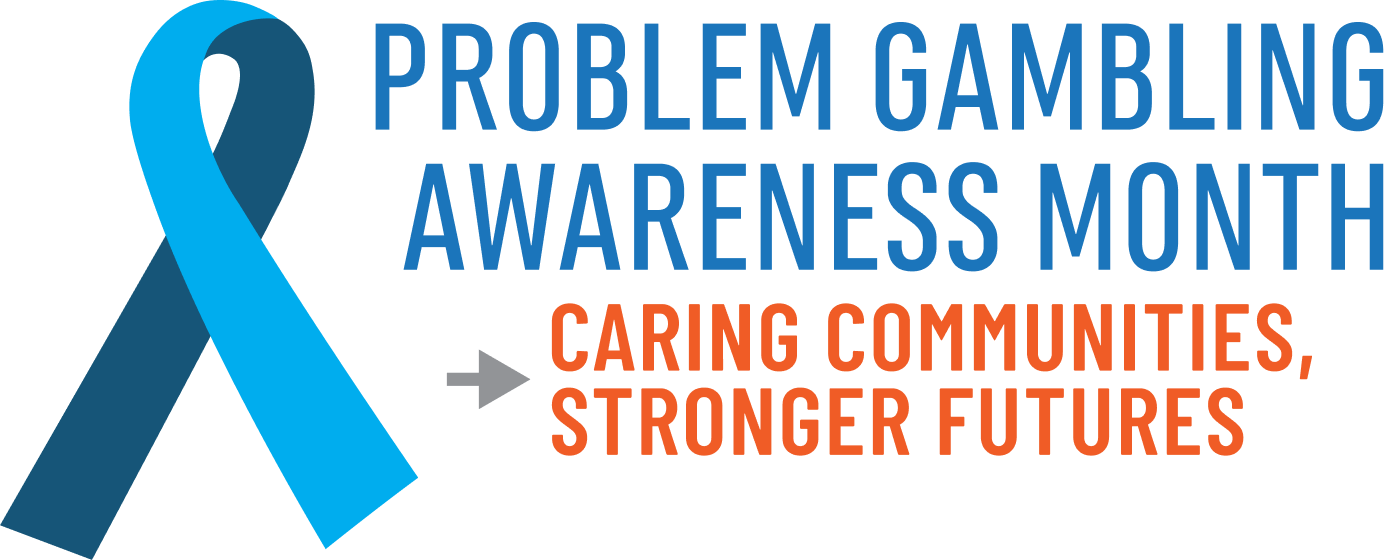
The 2026 Problem Gambling Awareness Month theme, “Caring Communities, Stronger Futures,” emphasizes the importance of a community driven approach to problem gambling awareness and support. When a community comes together – friends, families, educators, healthcare providers, local partners, and policymakers – silence is replaced with support, and isolation is replaced with connection.
Problem gambling, defined as gambling behaviors that disrupt or damage personal, family, or professional lives, affects millions of Americans. In the U.S. 2.5 million adults (1%) are estimated to meet the criteria for a severe gambling problem in a given year. Another 5–8 million (2–3%) are considered to have mild or moderate gambling problems. Additionally, in the past year, approximately 20 million American adults reported experiencing at least one indicator of problematic gambling behavior.
A Community-Driven Approach to Awareness and Support
Throughout March, Texas Coalition on Problem Gambling will lead efforts focused on increasing public understanding of problem gambling and ensuring individuals are aware of the available prevention, education, treatment, and recovery services in their community. Activities will include:
● (PGAM Activity #1) – e.g., Community conversations, education workshops, or local listening sessions
● (PGAM Activity #2) – e.g., Problem Gambling Screening Day, resource fairs, or awareness events
● (PGAM Activity #3) – e.g., Social media campaigns, storytelling projects, or webinars featuring local experts
These efforts reflect a simple truth: when community comes together — friends, families, educators, healthcare providers, local partners, and policymakers — silence is replaced with support, and isolation is replaced with connection. To learn more about problem gambling, please visit NCPGambling.org/FAQs
Texas Coalition on Problem Gambling encourages local media, partners, and residents to join the effort by sharing resources, uplifting stories of those in recovery, and helping connect people to available support.
If you or someone you know is struggling with a gambling problem, the National Problem Gambling HelplineTM offers free, confidential support 24/7:
📞Call or text 1-800-522-4700
💻 Chat at www.NCPGambling.org/chat.
Welcome LV Sands as a Foundational donor

We are proud to welcome Las Vegas Sands as a Foundational Partner to the Texas Coalition on Problem Gambling. Their leadership and commitment to addressing problem gambling reflect a meaningful investment in the health and well-being of individuals, families, and communities across Texas. This partnership helps lay the foundation for a comprehensive, statewide response—advancing awareness, prevention, and access to care for those affected by gambling-related harms.
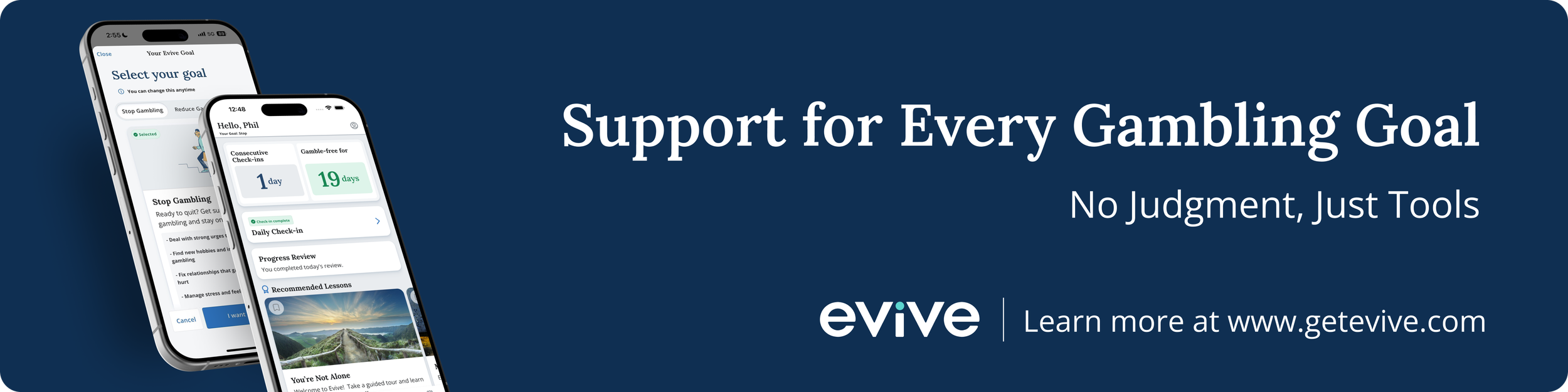
Announcing Texas version of Evive
We are excited to announce the Texas launch of Evive, an innovative digital platform designed to support individuals impacted by problem gambling. This Texas-specific version of Evive expands access to trusted resources, education, and tools that promote early intervention and recovery. By bringing Evive to Texas, we are strengthening our commitment to providing accessible, effective support for individuals, families, and communities across the state.
Welcoming Linda Uphoff to our Board

We are pleased to welcome Linda Uphoff to the Board of the Texas Coalition on Problem Gambling. Linda brings a wealth of experience and a deep commitment to improving the lives of individuals and families affected by problem gambling. Her leadership and insight will be invaluable as we continue to expand our impact and strengthen our efforts across Texas. We look forward to her contributions and partnership in advancing our mission.

Texas is a big place!
Your donation to TXCPG helps prevent and reduce the effects of gambling harms across the state.